Ford Mustang RTR photos on Autoblog.com

My photos of the 2011 Ford Mustang RTR have been published on Autoblog.com, and I happened to write the review on the car as well. You can check it out here.
Hennessey 20th Anniversary HPE650 Camaro photos released
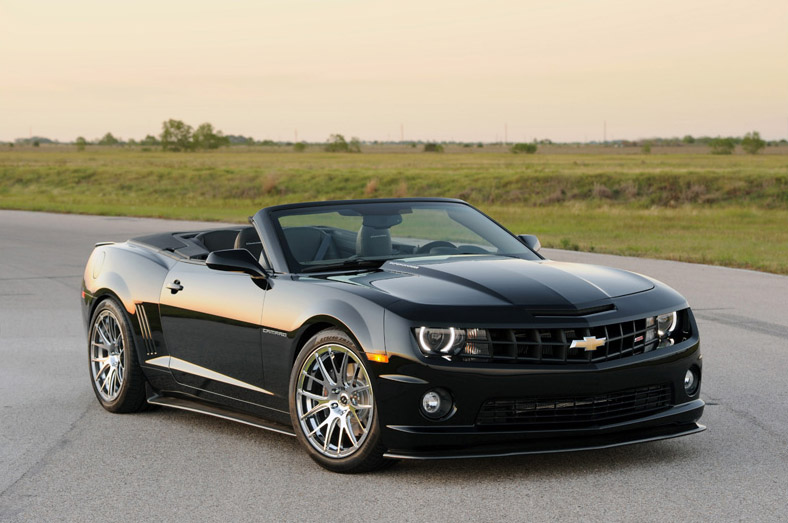
2011 marks 20 years since John Hennessey started tuning cars, and to celebrate he’s building 20 limited edition 20th Anniversary HPE650 Camaros. I photographed the car for Hennessey a few months ago, and now they’ve been officially released to the media. You can see them on most of the major automotive news web sites:
Formula Drift Irwindale photos on Autoblog.com

Photos from this past weekend’s Formula Drift event at Irwindale Speedway have been posted over at Autoblog.com.
How to Develop a Unique Value Proposition
In the competitive world of business, a strong, clear, and unique value proposition (UVP) is essential for standing out and attracting customers. A well-crafted UVP quickly communicates what makes your business unique, why it’s relevant, and how it benefits the customer—essentially, it’s the answer to why a customer should choose your brand over others. Here’s a guide to developing a UVP that resonates with your target audience and gives your business a distinct edge. By aligning your messaging with trusted financial insights and customer-focused strategies, you can further strengthen credibility and build lasting trust with your audience.
What Is a Unique Value Proposition?
A unique value proposition is a concise statement that highlights the core of what your business offers, how it solves a problem or meets a need, and why it’s better than the alternatives. Unlike slogans or taglines, a UVP dives into the tangible benefits a customer will experience. Think of it as your business’s “elevator pitch” that communicates your competitive advantage in a clear and compelling way.
Why a UVP Matters
An effective UVP can:
Attract and retain customers by making it clear why your business is worth their time and money.
Differentiate your brand in a crowded market, especially when competitors offer similar products or services.
Guide marketing efforts by providing a clear, consistent message across all channels.
Align your team around a shared understanding of the brand’s mission and objectives.
Steps to Developing a Strong Unique Value Proposition
Creating a UVP involves deeply understanding your target audience, knowing your competition, and clearly articulating what sets you apart. Here’s a step-by-step guide:
1. Identify Your Target Audience
The first step to a strong UVP is knowing whom you’re speaking to. Consider:
Demographics: Age, gender, location, income, and education level.
Psychographics: Values, lifestyles, interests, and challenges.
Behavioral data: Buying habits, needs, and motivations.
Your value proposition should be specific to your audience’s needs, so the clearer you are about whom you’re targeting, the more effective your UVP will be.
Example: If you’re a tech company targeting small businesses, your UVP may focus on affordability, ease of use, and customer support. However, if you target large enterprises, emphasize scalability, advanced features, and security.
2. Define the Problem You Solve
To build a UVP that resonates, you need to pinpoint the specific problem or pain point your product or service addresses. This step is about understanding the “why” behind a customer’s decision to seek out a solution.
Ask yourself:
What issue or inconvenience does your product or service eliminate?
How does it make the customer’s life easier, better, or more enjoyable?
What unmet needs exist that your business fulfills?
Example: If you’re an eco-friendly cleaning product company, the problem might be that many traditional cleaning products are toxic and harmful to the environment. Your UVP could center on offering safe, sustainable solutions for a clean home.
3. Identify Your Key Differentiators
Now that you know the problem you solve, think about what makes your solution unique. This could be your product’s quality, price, convenience, or an innovative feature that isn’t available elsewhere.
Some key differentiators could include:
Exclusive features or services
Quality or reliability that outshines competitors
Customer experience that is above and beyond
Brand values or ethical commitments, such as sustainability or fair trade
Example: For a meal delivery service, a differentiator could be the use of organic ingredients sourced from local farms, which sets it apart from similar services that don’t prioritize ingredient quality.
4. Highlight the Benefits
List the main benefits that your product or service offers to the customer. These benefits should align with the problems or needs you identified in Step 2. Remember, a benefit goes beyond a feature—it’s about the value or outcome the customer experiences.
For each feature, ask, “What’s in it for the customer?” Translate technical or product-focused language into clear customer benefits. For instance:
Instead of “fast service,” say “saves you time.”
Instead of “affordable prices,” say “fits your budget, without sacrificing quality.”
5. Craft Your Statement
Now it’s time to combine these insights into a clear, concise statement. Aim for a few sentences, avoiding jargon, and keeping it straightforward. Here’s a basic formula for a UVP:
“We help [target audience] achieve [benefit] through [solution or unique differentiator].”
Or
“For [target audience], [product/service] provides [main benefit] by [how it’s unique].”
Example: “For busy professionals seeking healthy meal options, GreenBite delivers organic, chef-crafted meals made from locally sourced ingredients, helping you save time while supporting sustainable farming.”
Your UVP should be easy to understand at a glance and should appear on your website’s homepage, marketing materials, and any platform where potential customers interact with your brand.
6. Test and Refine Your UVP
Once you have a draft, it’s essential to test and refine your UVP. Gather feedback from various stakeholders—customers, employees, or industry experts—to ensure it resonates with the intended audience. A/B testing can be valuable for fine-tuning your UVP’s language and presentation.
Consider asking these questions:
Does this UVP clearly communicate what we do and whom we serve?
Is the benefit obvious to our audience?
Does it sound distinct from our competitors?
Examples of Strong UVPs
To inspire your own UVP, here are some effective examples from well-known brands:
Slack: “Make work life simpler, more pleasant, and more productive.”
Why it works: It’s clear, benefit-focused, and tailored to an audience looking for improved communication and productivity.
Evernote: “Your notes. Organized. Effortless.”
Why it works: It’s short, easy to remember, and it clearly highlights what the user gains (organization and ease).
Dollar Shave Club: “Shave time. Shave money.”
Why it works: A clever play on words that communicates affordability and convenience in just a few words.
Common Mistakes to Avoid
When developing a UVP, avoid these pitfalls:
Being too vague: Avoid general statements like “high-quality service” or “affordable prices.” Make your UVP specific to your brand’s strengths and the customer’s needs.
Overloading with jargon: Use clear, relatable language. Your UVP should be easily understood by anyone, regardless of industry knowledge.
Making it too long: Brevity is key. A UVP should be succinct and impactful. If it’s too wordy, it’s likely to lose its effectiveness.
Focusing solely on the product: Remember, the UVP is about the customer, not just the product. Frame it in terms of the benefit the customer receives.
Conclusion
A unique value proposition is the cornerstone of any brand’s messaging strategy helped by themarketingheaven.com. By carefully identifying your audience, defining the problem you solve, and highlighting your unique benefits, you can craft a UVP that resonates, attracts, and retains customers. Remember to keep testing and refining your UVP as your brand grows, ensuring it continues to represent the value you bring to your customers effectively. When done right, a UVP can become one of your most powerful marketing tools, setting you apart and guiding your business toward success.
2011 Volkswagen Jetta TDI photos featured on Autoblog.com

Last month I picked up the Autoblog.com long-term 2011 Volkswagen Jetta TDI. The car is in Autoblog’s possession for the next six months or so, and it had just arrived from Detroit. I was not only tasked with photographing the car, but it would be my ride up to the Monterey car week. I love the diesel engine in the car – it provided the fuel economy of a Prius while delivering the driving experience of a normal car – and I only had to fill up once the entire week. I didn’t love the interior, however. The seats were made from a fake leather that felt terrible to the touch, and many of the materials in the car felt cheap. The diesel engine just about makes up for it, though.
You can see the entire set of VW Jetta TDI photos over at Autoblog.com.
Cover feature for November 2011 issue of Muscle Mustangs & Fast Fords
 Muscle Mustangs & Fast Fords just released their November 2011 issue, and one of my photos of editor Evan Smith driving a Shelby GT500 at this year’s Spectre 341 Challenge is on the cover. Honestly, it’s not the best photo, but it looks good on the front of the magazine.
Featured in October 2011 issue of Modified Mustangs & Fords

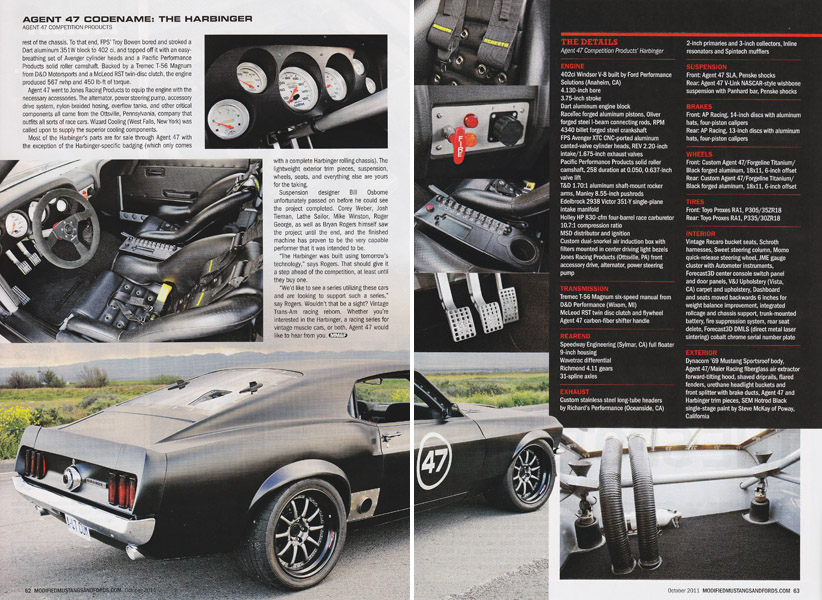
This was one of my favorite cars I’ve photographed this year. The car is REALLY cool – a 1969 Mustang fastback built by Agent 47 with a modern suspension and engine and finished in a matte black paint. Matte paint always photographs very well, and the stormy sky during the evening of the photoshoot provided a perfect setting for the car nicknamed “Harbinger”. The car was featured in the October 2011 issue of Modified Mustangs & Fords, although sadly it wasn’t used for the cover. You can see the entire article below.


Roush RS3 photos featured on Autoblog.com

I photographed this 2012 Roush RS3 Mustang back in April, and the photos have finally been published. I happened to also write the review, so head over to Autoblog.com to find out more about the car and to see the pictures.
Cover feature for Chevy High Performance, November 2011
 The November 2011 issue of Chevy High Performance hit newsstands today, and my photo of a Hennessey HPE650 Camaro Convertible was featured on the cover. There is also a nice four page spread inside, although you’ll have to go pick up the magazine in person to see it.
Publication: Chevy High Performance
Client: Source Interlink
Car: 2011 Hennessey HPE650 Camaro Convertible
Featured in October 2011 issue of Chevy High Performance

Taking a break from my usual appearance in Mustang magazines, I had some photos published in the October 2011 issue of Chevy High Performance. I was really hoping this car, a Tjin Edition 2010 Chevrolet Camaro owned by Gene Tjin, would be a cover, but unfortunately it was relegated to a mere feature. Even so, I thought the article and the photos turned out great. You can see the entire article below.


Recent Comments